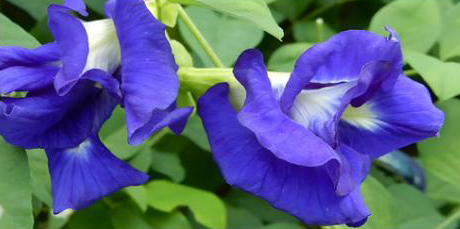
Efficiency of Aqueous Extract of Clitoria ternatea L. in controlling Aphis craccivora Koch, 1854 (Aphididae) and Chalcodermus bimaculatus Fiedler, 1936 (Curculionidae) in Cowpea
DOI:
https://doi.org/10.18227/1982-8470ragro.v19i00.8584Abstract
The cultivation of cowpea (Vigna unguiculata (L.) Walp.) is limited by pests such as the black aphid (Aphis craccivora Koch, 1854) and the pod weevil, commonly known as manhoso (Chalcodermus bimaculatus Fiedler, 1936), which significantly reduce productivity and compromise the quality of harvested grains. Within the context of Integrated Pest Management (IPM), the use of plant extracts has been increasingly recognized as a promising alternative to conventional chemical control, with a lower environmental impact. This study aimed at evaluating the effectiveness of an aqueous extract of Cunhã (Clitoria ternatea L.) in controlling these two pests in cowpea cultivation. The experiment was conducted using the UFRR-Grão Verde cultivar, in a completely randomized design with three treatments: Control - water application), Evidence® 700WG insecticide - IMIDACLOPRID 700 g kg-1, 150 g p.c. ha-1; 500 L ha-1 of spray solution, and aqueous extract of Cunhã - 100 g L-1 of water, fresh weight basis, with varying replications. Cowpea rows (9 m) were alternated with strips of Brachiaria ruziziensis (9 m), spaced at 0.8 m apart, used as living barriers between treatments. Applications were carried out at 18, 30, and 46 days after planting (DAP). At 62 DAP, when the pods were physiologically matured, 20 pods per plot were collected to assess the incidence of C. bimaculatus. The extract of Cunhã treatment was effective in controlling A. craccivora, reducing infestation, but was ineffective against C. bimaculatus. The Evidence® 700WG insecticide treatment satisfactorily controlled both pests, demonstrating its effectiveness as the reference chemical treatment.
Downloads
Published
Issue
Section
License
Copyright (c) 2025 AGRO@MBIENTE ON-LINE JOURNALRAGR

This work is licensed under a Creative Commons Attribution-NonCommercial-NoDerivatives 4.0 International License.
I declare on my behalf and on behalf of the other authors that I represent in the act of submitting this article, to REVISTA AGRO@MBIENTE ON-LINE that: • 1. The content of the article is the result of original data and not published or submitted to other journals . • 2. In addition to the lead author, all co-authors participated sufficiently in the work to make public their respective responsibilities for the content. • 3. In case of acceptance of the article, the authors agree that the copyright referring to it will become the exclusive property of Revista Agro@mbiente On-line, any reproduction, total or partial, in any other part or means of dissemination is prohibited, printed or electronic, without the prior and necessary authorization being requested and, if obtained, acknowledgments must be made to the Revista Agro@mbiente On-line of the Centro de Ciências Agrárias/UFRR.