Asparagus in the Amazonian Savanna: cultivation, challenges, and potential for regional agricultural diversification
DOI:
https://doi.org/10.18227/1982-8470ragro.v20i00.8871Palabras clave:
Agronomic adaptation. Asparagus officinalis. Nutritional valorization. Roraima.Resumen
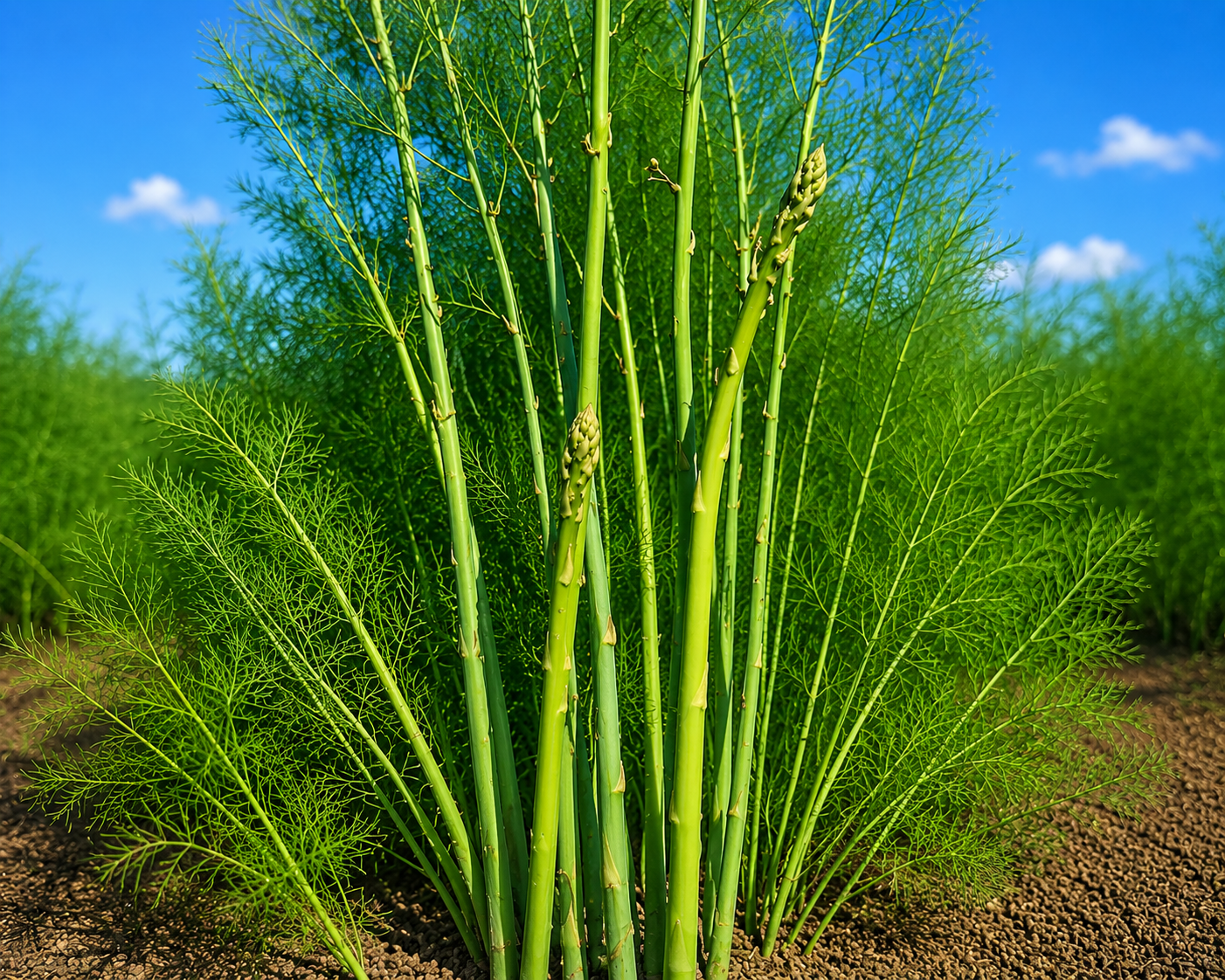
The Amazonian savanna contains edaphoclimatic conditions that are challenging for agricultural production, characterized by high temperatures, hydric seasonality, and highly weathered soils, which require the adoption of adapted crops and management practices. In this context, asparagus (Asparagus officinalis L.) emerges as a potential alternative for agricultural diversification in frontier regions, provided it is supported by appropriate technical strategies. The objective of this study was to analyze, through a systematic literature review, the available evidence on asparagus cultivation in tropical savanna environments, with emphasis on agronomic adaptation, management, environmental stresses, plant health, postharvest aspects, and value-adding potential. The review was conducted in accordance with PRISMA guidelines, using a structured search strategy in the scientific databases PubMed, SciELO, Scopus, and Web of Science, complemented by a search on Google Scholar. The included studies were organized according to the PICO framework and synthesized into thematic analytical axes. At the end of the screening and eligibility process, 37 studies comprised the analytical dataset. The results indicate that asparagus performance in tropical savannas is conditioned by the interaction between environment and water management, soil and fertility management, physiological responses to abiotic stresses, the sanitary status of production systems, and postharvest practices. Evidence suggests that planned irrigation can mitigate the absence of thermal winter, while edaphic limitations, particularly related to acidity and phosphorus availability, require specific soil management. Phytosanitary risks in perennial systems and high postharvest sensitivity are also highlighted, as well as the nutritional and functional potential of asparagus and its co-products. It was concluded that asparagus has potential for integration into agricultural systems in tropical savannas, provided its introduction is guided by technical planning, regional validation, and integrated management.
Descargas
Publicado
Número
Sección
Licencia
Derechos de autor 2026 REVISTA AGRO@MBIENTE ON-LINE

Esta obra está bajo una licencia internacional Creative Commons Atribución-NoComercial-SinDerivadas 4.0.
Declaro por mi nombre y en nombre de los otros autores que represento el acto de presentación de este artículo, la Revista Agro@mbiente On-line que: • 1. El contenido del artículo es el resultado de los datos originales y no publicados o presentados a otras revistas. • 2. Además del autor principal, todos los co-autores participaron en el trabajo lo suficiente como para hacer pública su responsabilidad por el contenido. • 3. En caso de aceptación del artículo, los autores coinciden en que los derechos de autor relativos a ellos pasará a ser propiedad exclusiva de la Revista Agro@mbiente On-line, prohibida cualquier reproducción, total o parcial en cualquier forma o medio de difusión, impresa o electrónica, sin la autorización previa y necesaria solicitada y, si obtenida, debe aparecer gracias a Lo periodico Agro@mbiente On-line.